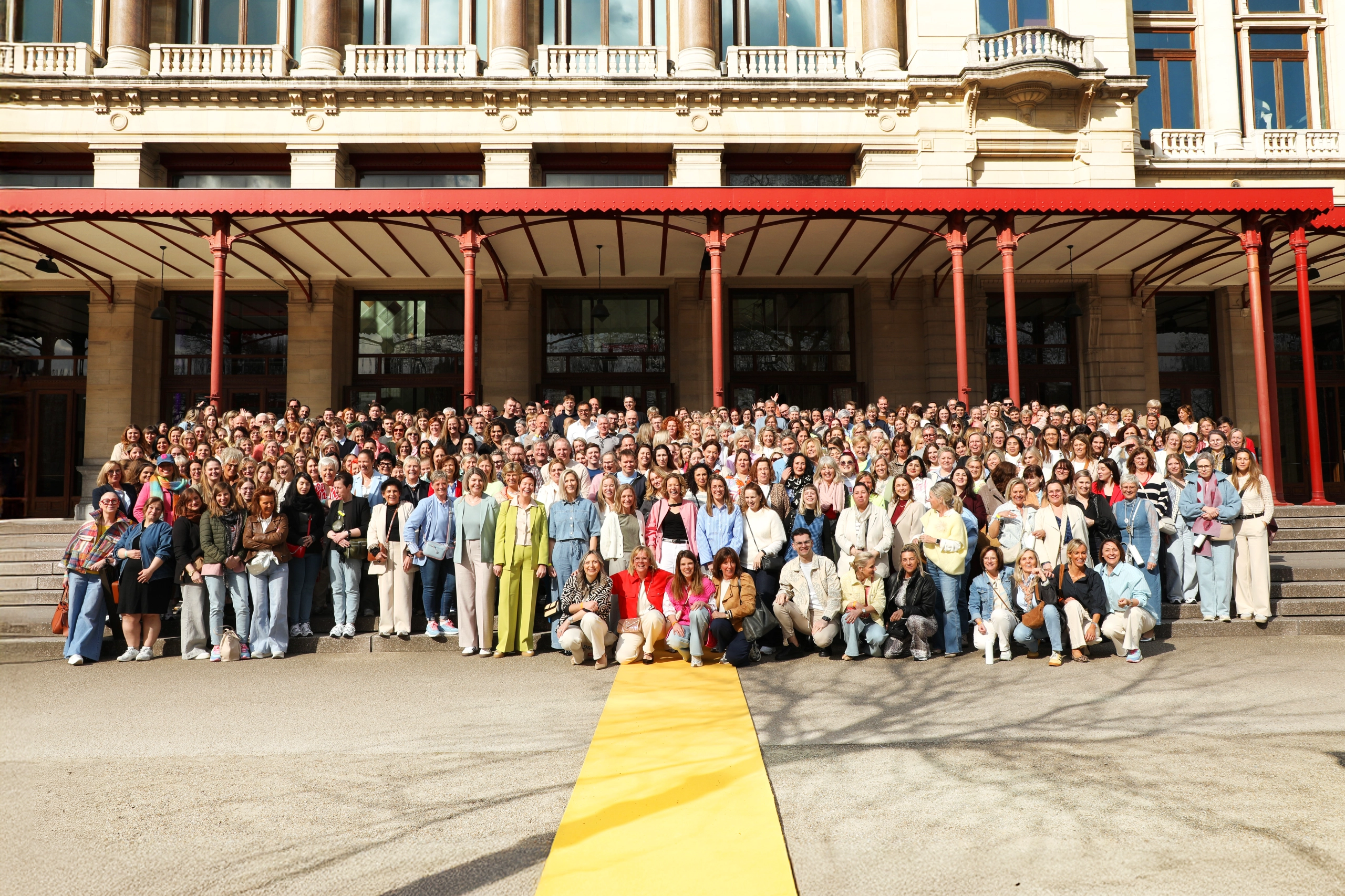
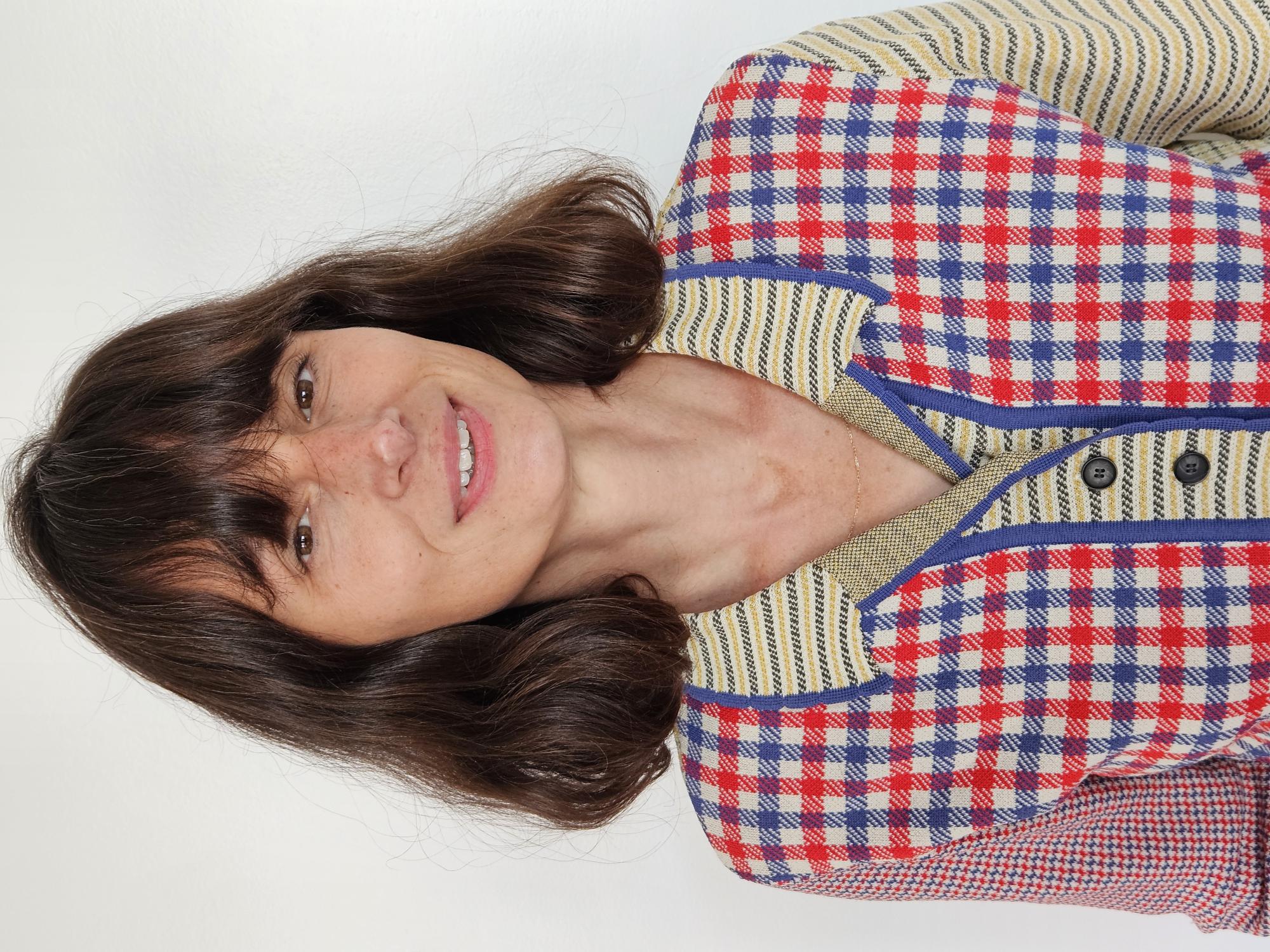
Bozar, an emblematic cultural institution in Brussels, aims to make culture more accessible and more representative of the diversity of Belgian society. But how is this ambition translated into concrete action? We spoke with Anna Vondracek, Diversity and Inclusion Coordinator, to better understand the challenges and initiatives within the institution.
In Brussels, Bozar occupies a unique place within the cultural landscape. As an international and multidisciplinary institution, it welcomes a wide audience every year through exhibitions, concerts, debates, screenings, and other artistic activities. But behind this rich programme, Bozar also asks itself an essential question: how can diversity and inclusion become a concrete reality, both for employees and for the public?
A Cultural Mission for Everyone
For Anna, diversity is not a secondary theme at Bozar: it is directly connected to the institution’s mission. Bozar describes itself as an international house at the crossroads of Brussels, Europe, and the world. Its mission is to make art accessible to everyone and not only attract large numbers of visitors, but also reach a diverse audience from different backgrounds.
This ambition is reflected in the programme, but also in concrete actions aimed at people who do not naturally come to Bozar. As Anna explains, the institution tries to “actively reach out to audiences.”
The institution focuses especially on groups who remain distant for social, geographical, or financial reasons, so that culture does not remain reserved for a limited circle.
Working on Audience Reach and Accessibility
Bozar has already introduced several initiatives to make culture more accessible. These include specific programmes for schools, often free of charge thanks to the support of foundations or partners. These projects make it possible to reach children and young people who might otherwise never have entered the institution.
The institution also develops guided tours, participatory projects, reduced-price initiatives, and collaborations with neighbourhood associations and community centres in Brussels. The idea is simple: to build stronger connections with diverse audiences and create bridges between the cultural world and society as a whole.
Internal Diversity Also Matters
The reflection on inclusion is not limited to the public. It also applies to Bozar’s teams. The institution regularly recruits staff, and diversity - in terms of gender, age, and background - is considered an important criterion. The workforce includes a wide variety of roles: from reception and mediation to artistic programming, technical professions, communication, and administration.
Anna explains that Bozar now wants to make this approach more structural. For many years, the institution acted rather intuitively, depending on opportunities and context. Today, the goal is to develop a real diversity and inclusion strategy, in collaboration with the human resources department, in order to foster a more representative and welcoming working environment.
This ambition is important: a diverse team not only helps represent society more accurately, but also leads to better decisions, more ideas, and a better understanding of the audience’s expectations.
A More Representative Programme
Diversity is also reflected in artistic choices. At Bozar, it is not only about programming recognised artists, but also about ensuring a variety of stories, origins, disciplines, and aesthetics.
The institution wants to open its stages to artists from different continents and contexts, balance the representation of women and men, and offer diverse artistic worlds. This attention is particularly important in fields such as classical music, where inequalities remain significant.
Bozar also aims to broaden its audience by offering art forms that appeal to multiple generations and different sensitivities. Diversity is therefore not merely a question of image: it directly influences the programme itself.
The Challenges Are Real
Despite these efforts, several challenges remain. One of the most important concerns recruitment. Even when vacancies are written inclusively, it remains difficult to reach networks that Bozar does not yet sufficiently engage with. In other words, the question is not only how to write open job advertisements, but also how to distribute them within broader and more diverse circles.
Another challenge concerns the institution’s image. Bozar acknowledges that it is sometimes still perceived as a classical, white, and elitist place, which can discourage some people. The institution is therefore also working on its communication and image in order to show that it is more open and accessible than people may think.
Some challenges also fall outside the institution’s direct control. Anna acknowledges that staff members are sometimes confronted with racist or discriminatory remarks, particularly when they wear a hijab or come from a different background. In response to such behaviour, Bozar states that it applies a zero-tolerance policy and emphasises the importance of protecting its teams.
A Message for Companies
According to Anna, the first piece of advice for a company that wants to become more inclusive is simple: start by genuinely caring about it. Diversity may seem complex at first, but it is often possible to move forward step by step through small, concrete improvements.
“Diversity is not a limitation, but a strength”
Anna emphasises this. According to her, more diverse teams allow organisations to make better decisions, better understand society, and stimulate innovation.
She also points out that in a city like Brussels, where the population is particularly diverse, it becomes essential to take these questions seriously. For her, inclusion is not a passing trend, but a necessity for organisations that want to evolve alongside today’s society.
This message closely aligns with the mission of Hijabis at Work: to demonstrate that inclusion should not be seen as a one-time effort, but as a sustainable, meaningful, and valuable approach for organisations and for society.
A More Open Culture for Tomorrow
The example of Bozar shows that a cultural institution can play an important role in promoting diversity, provided that it acts on multiple levels: in its programming, recruitment, communication, and relationship with the public.
Inclusion does not happen overnight. It is built through reflection, resources, time, and above all a genuine willingness to evolve.
Today, Bozar is trying to transform this willingness into a clearer, more structured, and more visible strategy, so that diversity does not remain merely an intention, but becomes a lasting reality within the institution.